
Series · Part 5 of 6
Why Traditional Banking Won't Disappear — But It Will Change
Forget 'blockchain kills banks'. The more likely future is a growing connection between existing financial infrastructure and stablecoins, tokenisation, APIs, wallets and AI.
The story that keeps being told
For more than a decade, headlines have predicted that new technology would make banks obsolete. First it was online payments, then fintech apps, then cryptocurrencies. Banks are still here. That is not because nothing changed – a great deal changed – but because banks do things that are hard to replace.
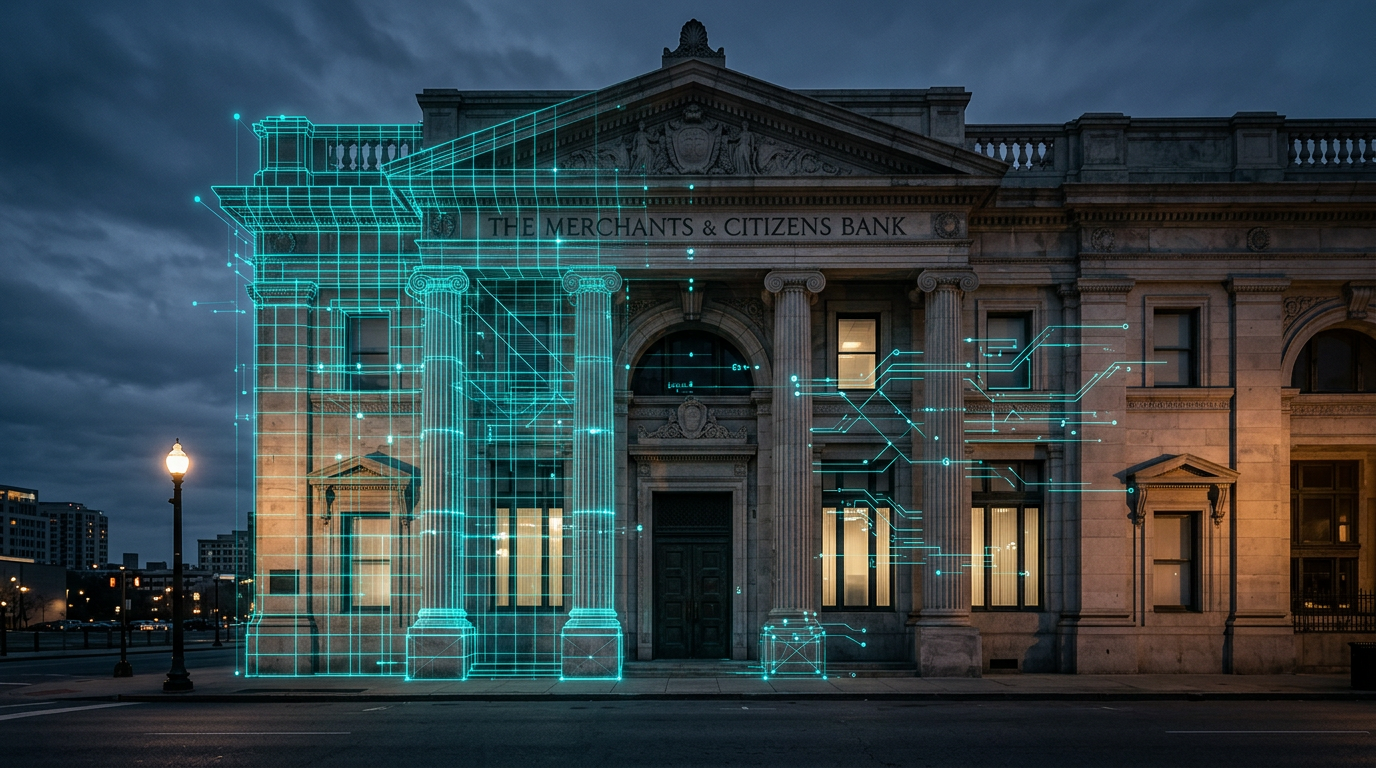
A more useful way to look at the future is not 'what will replace banks?' but 'how will banks change when their infrastructure becomes digital, automated and programmable?'
What banks provide beyond technology
Banks hold deposits under regulation and supervision, often backed by deposit protection schemes. They provide credit, manage risk, verify identities, fight financial crime and connect to central-bank systems. Cards and established payment networks offer protections and a level of acceptance that has taken decades to build.
These functions depend on trust, legal frameworks and balance sheets as much as on software. New technology can make them faster and cheaper, but it does not make them unnecessary.
Where the change is happening
Stablecoins and tokenisation: several banks are exploring tokenised deposits and the settlement of tokenised assets such as bonds and funds. APIs: open-banking rules in many regions let customers share data with other services and let apps initiate payments directly from bank accounts.
Digital wallets: more and more payments happen through wallets on phones, with the bank account or card in the background. AI: from fraud detection to customer service, AI is becoming part of daily bank operations. Each of these trends connects existing infrastructure with new layers rather than replacing it.
The bank as infrastructure
One likely direction is that some banks become more like infrastructure providers. Instead of offering every product themselves, they provide regulated accounts, compliance and settlement, while other companies build customer experiences on top through APIs. This model, often called banking-as-a-service, already exists in many markets.
Other banks will focus on relationships and advice, using AI to personalise service. Many will do both. What they have in common is that the underlying systems become more software-driven, more open and more continuous.
What remains difficult
Modernising a bank is hard. Core systems are often decades old and deeply interconnected. Every change must meet strict requirements for security, resilience and regulatory compliance. Integrating blockchain networks, AI models and open APIs into that environment takes time and careful governance.
Customers also value stability. A bank that changes quickly but loses trust has not gained anything. That is why transformation in banking tends to be gradual, even when the technology is ready.
A better question
The interesting future is not one where banks disappear, but one where the boundaries between banks, payment providers, technology companies and digital-asset infrastructure become more fluid.
For users, the practical result may simply be that money moves faster, services work across more platforms and financial tools become more intelligent – while the regulated institutions behind them are still there, doing their job in a different way.
This article is for educational purposes only and is not financial, investment, tax or legal advice.